
Tip & Trick
Did you know your keyboard hides powerful symbols starting with 'A' that can transform your typing speed and productivity? These 10 underused symbols—from accent marks to mathematical operators—are essential for coders, writers, and professionals who want to work smarter, not harder.
Accented Letters: É, È, Ê, Ë
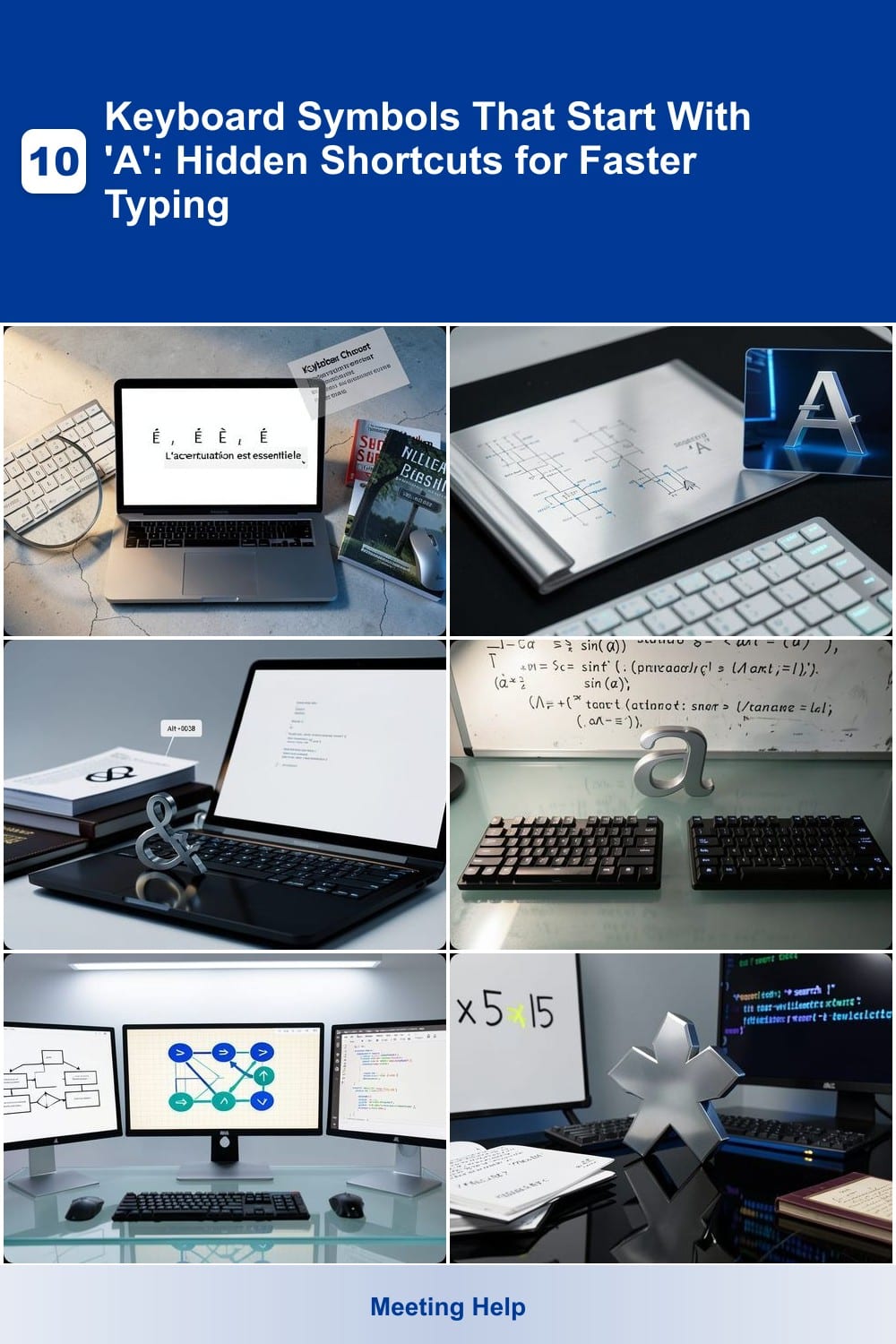
Tired of manually copy-pasting accented letters like É, È, Ê, or Ë? These characters are essential for French, Spanish, and German documents, yet many users struggle to type them efficiently. Instead of hunting through symbol menus, try Alt codes or Unicode shortcuts—they’re faster and eliminate errors.
On Windows, press Alt + 0201 for É, Alt + 0200 for È, Alt + 0202 for Ê, and Alt + 0203 for Ë. For Mac users, hold Option + E and type e, then release to cycle through accents. Language learners and multilingual professionals will appreciate how these shortcuts streamline typing in multiple languages. ⚡
Angstrom Symbol (Å)
Tired of manually searching for precise measurements in technical documents? The angstrom symbol (Å)—representing 0.1 nanometers—is a game-changer for scientists, engineers, and researchers. It’s the standard unit for atomic-scale measurements, yet many overlook its keyboard shortcut.
On Windows, type Alt + 0211 to insert Å instantly, while Mac users can use Option + Shift + A. This symbol appears in crystal structures, semiconductor specs, and even DNA research papers. No more hunting through symbol menus or copy-pasting from unreliable sources—just type and go. ⚡
Ampersand (&)
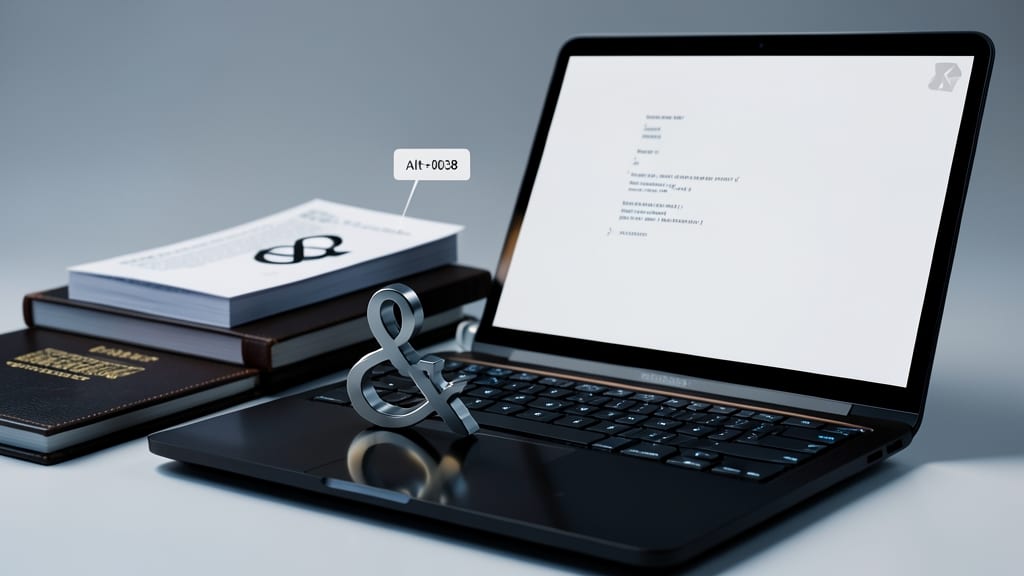
The ampersand (&) isn’t just Coca-Cola’s logo—it’s a powerhouse in legal, business, and coding documents. Whether you’re drafting contracts, writing code, or formatting business emails, this symbol saves time by replacing "and" in formal contexts.
On Windows, hold Alt and type 0038 on the numeric keypad, then release. For Mac, use Option + Shift + 7—no hunting through menus required. In programming, it’s critical for shell scripting (e.g., ls *.txt &) and data parsing. Lawyers and developers rely on it daily to keep documents concise and precise.
If you work with contracts, code, or formal writing, mastering this shortcut will shave minutes off your workflow every day. ⚡
Alpha Symbol (α)
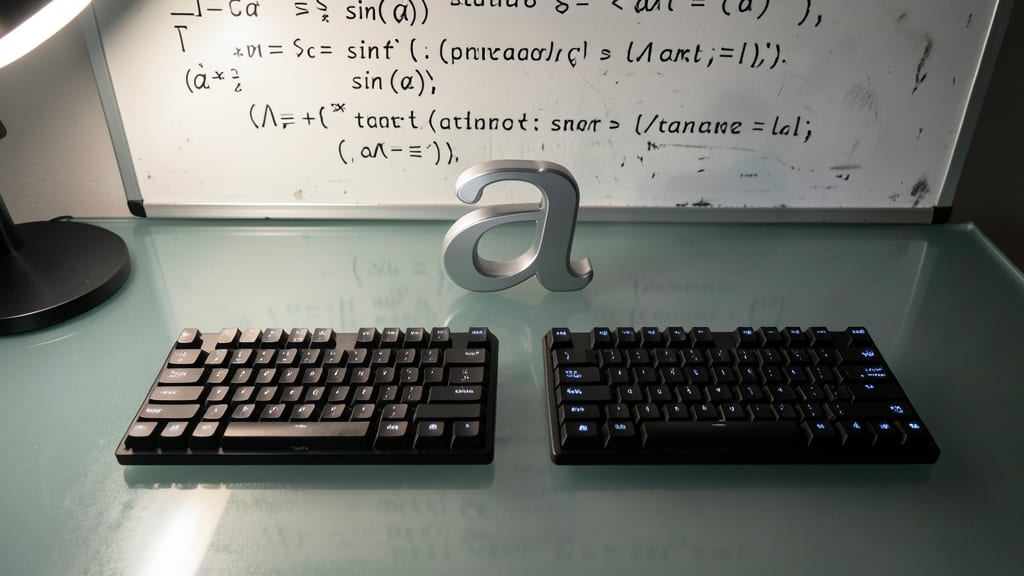
Stuck writing complex equations or coding algorithms? The Alpha Symbol (α) is your secret weapon—used in physics, math, and programming to denote variables, angles, or efficiency metrics. Typing it manually is slow, but the Alt code 945 on Windows or Option + Shift + A on Mac makes it effortless.
This Greek letter saves time in LaTeX documents, scientific papers, and even programming comments (like α = 0.05 for significance levels). It’s also the foundation for other Greek symbols, so mastering it unlocks a whole alphabet of shortcuts for technical work.
Perfect for students, engineers, and developers who want to type faster without breaking focus. ⚡
Arrow Symbols (→, ←, ↑, ↓)

Need to create flowcharts, UML diagrams, or code logic faster? The arrow symbols (→, ←, ↑, ↓) are your secret weapon—no more digging through symbol menus or copying from the web. These four characters instantly clarify direction, sequence, and relationships in technical work, saving you time and frustration.
On Windows, press Alt + 24 (→), Alt + 25 (←), Alt + 26 (↑), or Alt + 27 (↓) for the black arrow versions. For sleeker Unicode arrows (like ⟶, ⟵, ⟲, ⟳), use Alt + 8594 (→), Alt + 8592 (←), Alt + 8593 (↑), or Alt + 8595 (↓). Mac users can type them directly via Option + Shift + . (→) or Option + Shift + , (←), while Option + Shift + 8 gives you ↑/↓ arrows.
These symbols are a must-know for developers (pseudocode), designers (wireframes), and students (study notes). Master them, and you’ll never waste time hunting for the perfect arrow again. ⚡
Asterisk (*) and Alternate Forms

The asterisk () isn’t just for marking bullet points—it’s a multi-purpose powerhouse in coding, math, and writing. From footnotes to wildcards, this symbol does more than you’d expect, saving you time across disciplines.
Use it for multiplication in equations (e.g., 3 × 5), wildcards in regex (e.g., file.txt), or footnotes in LaTeX (e.g., *[1]). On Windows, type it with Alt + 042 or Shift + 8, while Mac users can use Option + 8. Its Unicode variants (like ‚Ķ for ellipses) add polish to documents without manual formatting.
Developers, writers, and data analysts will love how this symbol eliminates manual work—whether labeling references or parsing patterns. Master it, and you’ll type faster while keeping your workflow clean. ✨
At Symbol (@)

Tired of pausing mid-sentence to hunt for the @ symbol in your symbol menu? This tiny but mighty character is the foundation of email addresses and social media handles, yet most people still waste time searching for it. A simple shortcut can save you seconds per email—and those seconds add up to hours over a year.
On Windows, hold down Alt and type 64 on the numeric keypad, then release. On Mac, press Option + 2 for instant access. Pro tip: Many keyboards also have the @ symbol embedded near the 2 key—just check your keyboard’s layout. For coders, this symbol also marks username placeholders in APIs and package imports in Node.js, making it a must-know for developers.
Whether you’re drafting emails, managing social profiles, or coding, mastering this shortcut will reduce repetitive strain and boost your workflow. Give it a try—your fingers will thank you! ⚡
Angle Brackets (< >)

If you’ve ever written even a single line of HTML or XML, you’ve already used angle brackets (< >)—the unsung heroes of structured data. These symbols don’t just mark text as code; they define entire languages, from web markup to configuration files, with precision and efficiency.
In HTML, they wrap tags like `
`, while in XML, they structure nested elements like <book><title>...</title></book>. On Windows, type them directly by holding Shift + > (right of Enter) and Shift + , (left of Enter). For Mac users, it’s Option + > and Option + <. Pro tip: Many IDEs (like VS Code) auto-close them—just type `
Whether you’re a web developer, data scientist, or even a casual blogger, mastering these shortcuts cuts typing time by half. No more hunting through symbol menus—just type, structure, and code faster. ⚡
Apostrophe (’)

The apostrophe (’) isn’t just a tiny punctuation mark—it’s the secret weapon for contractions, possessives, and polished typography. Misusing it (like writing "its" instead of "it’s") can make even professionals look unprofessional, but mastering the shortcut saves time and headaches.
On most keyboards, the straight apostrophe (‘) sits above the Enter key (Windows) or next to the Return key (Mac). For the curved apostrophe (’)—the correct choice for English—use Alt + 0146 (Windows) or Option + Shift + ‘ (Mac). Pro tip: Enable "Smart Punctuation" in Word or Google Docs to auto-correct straight apostrophes to curved ones.
Writers, editors, and social media managers will appreciate how this small mark elevates clarity. Programmers might also spot its niche use in regex patterns (e.g., ’ for possessive matches). Typing it right builds credibility instantly. ✨
Alchemical Symbol for Gold (☉)

Want to add a touch of historical elegance or scientific precision to your writing? The ☉ alchemical symbol for gold isn’t just for medieval manuscripts—it’s a powerful tool for chemists, historians, and niche writers who want to stand out. This symbol, with its Unicode code U+2609, represents both the element gold and the sun in alchemy, making it versatile for technical and artistic projects.
On most systems, you can type it using the Alt code 9737 (hold Alt, type the numbers, then release). For Mac users, try Option + Shift + 9 followed by Option + 8. It’s perfect for labeling diagrams, creating vintage-style documents, or even adding flair to technical reports where a touch of symbolism enhances clarity.
Whether you’re restoring an old manuscript or designing a modern scientific illustration, this symbol adds authenticity and visual interest without sacrificing professionalism. ⚡