
Coding
SQL Server 2012 introduced groundbreaking features that transformed database management, performance, and security. These 10 innovations redefine how developers build, optimize, and secure applications—essential knowledge for modern data professionals.
Columnstore Indexes for Massive Data Compression
Struggling with slow analytics queries on massive datasets? SQL Server 2012’s columnstore indexes could be your game-changer. Unlike traditional row-based storage, this feature stores data by columns, drastically reducing I/O and memory usage for analytical workloads.
With columnstore indexes, you gain 10x faster query performance on large datasets, thanks to advanced compression techniques. This feature excels in data warehousing and reporting scenarios, where aggregations and scans dominate. The batch mode processing further optimizes performance by handling large chunks of data efficiently.
Perfect for businesses dealing with terabytes of historical data, columnstore indexes are a must-try for BI teams and analytics-focused developers. ⚡
AlwaysOn Availability Groups for High Availability
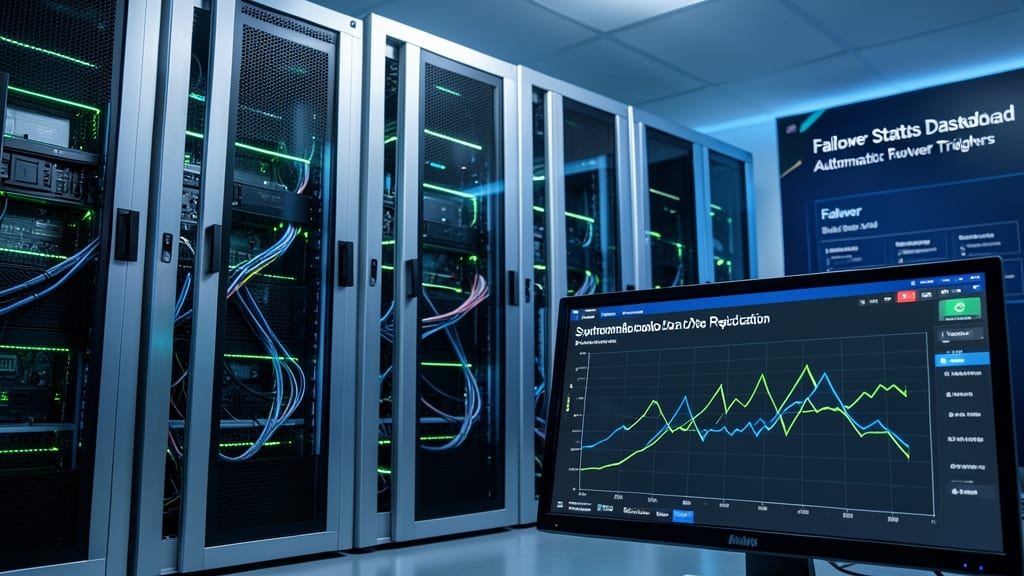
Mission-critical applications can’t afford downtime—and AlwaysOn Availability Groups in SQL Server 2012 delivers the solution. This feature introduced synchronous data replication across multiple servers, ensuring real-time consistency while eliminating manual failover headaches.
With automatic failover and zero data loss, your databases stay online even if a primary server crashes. You can configure up to 8 secondary replicas for read-scale workloads, and the built-in health monitoring proactively detects issues before they impact users. Perfect for financial systems, e-commerce platforms, or any app where uptime is non-negotiable.
Database administrators and DevOps teams will love the simplified management—no more complex clustering setups. For enterprises running high-transaction workloads, this is the battle-tested setup. ⚡
Contained Databases for Simplified Deployment

Tired of deployment headaches tied to master database dependencies? Contained databases in SQL Server 2012 break the mold by letting each database operate as a self-sufficient unit with its own metadata and settings.
This feature eliminates the need for a central master database dependency, meaning you can now move, deploy, or restore individual databases without worrying about breaking other systems. The contained database model supports both partial (metadata only) and full (metadata + user data) containment, giving you flexibility for different scenarios. Plus, it simplifies backup and restore operations by treating each database as a standalone entity.
Perfect for dev teams managing multiple environments (dev, test, prod) or ISVs distributing database solutions—this is the ultimate tool for portability and isolation. ✨
Sequence Objects for Custom Number Generation

Tired of identity columns limiting your numbering flexibility? SQL Server 2012 introduced sequence objects, a game-changer for generating custom numeric values across tables with precision and control.
Unlike rigid identity columns, sequences support multiple tables, custom increments (like 5, 10, or even negative steps), and gap handling—perfect for complex scenarios like order IDs with reserved ranges or multi-table synchronization. You can even define cycle behavior (restarting after max value) or cache values for performance. The syntax is intuitive: CREATE SEQUENCE dbo.OrderID_Seq AS INT START WITH 1000 INCREMENT BY 1;
This feature is a must for ERP systems, inventory tracking, or any application needing non-sequential but predictable numbering. Developers managing multi-table workflows will appreciate the flexibility over traditional identity columns. ⚡
Contained User Authentication for Security

Tired of managing user credentials across multiple SQL Server instances? Contained User Authentication in SQL Server 2012 lets databases handle their own logins—no more relying on the master database for user identities.
This feature introduces contained users, which store credentials within the database itself, enabling seamless portability and independent management. You gain security isolation between environments (dev, test, prod) while reducing administrative overhead by eliminating cross-database login dependencies. The USERMUSTREBUILD_LOGIN option even ensures smooth migrations when restoring databases.
Perfect for multi-tenant SaaS platforms or organizations with complex deployment pipelines, this feature cuts through the complexity of managing SQL logins at scale. 💻
Power View for Interactive Data Visualization

Tired of waiting for IT to generate reports before making data-driven decisions? Power View in SQL Server 2012 democratized business intelligence by putting interactive visualization tools directly into the hands of non-technical users.
This Excel-like interface lets you drag-and-drop tables, charts, and maps onto a canvas to create dynamic reports with zero coding. The tool connects seamlessly to SQL Server Analysis Services cubes and relational databases, while supporting real-time filtering and drill-down capabilities. Best of all, your creations automatically update when underlying data changes.
Perfect for analysts, marketers, or managers who need to explore trends without IT bottlenecks, Power View turns complex datasets into intuitive visual stories. ✨
FileTable for Unified File and Database Storage
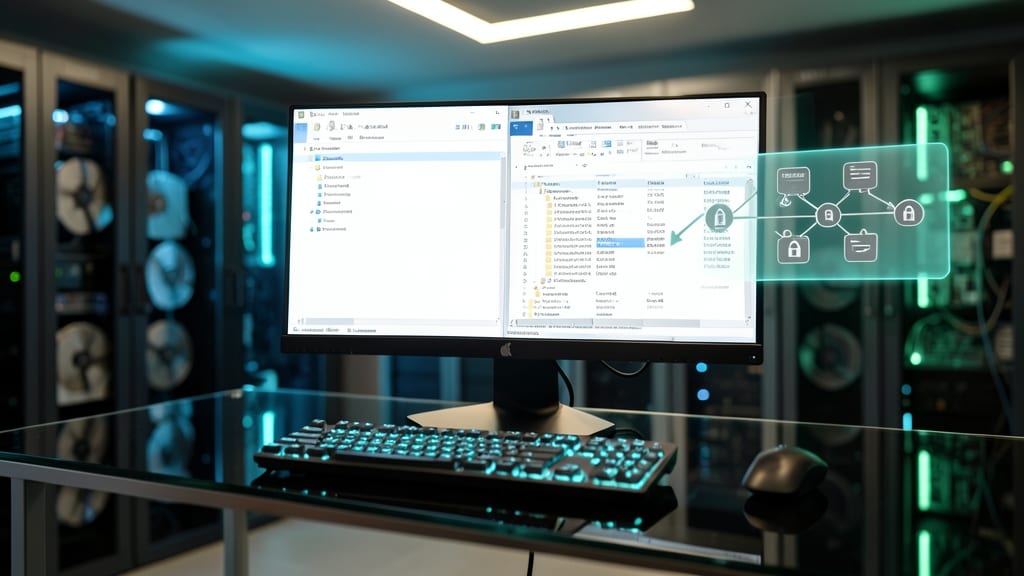
Tired of juggling file systems and databases like separate universes? FileTable bridges that gap by letting you store files directly in SQL Server tables while keeping all the familiar file system behaviors—metadata, permissions, and even hierarchical paths.
With FileTable, you get native support for NTFS-style file properties (like creation dates, sizes, and attributes) while leveraging SQL Server’s querying power. Need to search for all Word documents modified in the last month? Just run a T-SQL query—no need for separate file system traversals. The feature also integrates with Windows Explorer for drag-and-drop access, making it feel like a natural extension of your storage system.
This is a game-changer for developers managing document repositories, version-controlled files, or any scenario where files and metadata need to live in sync. Perfect for enterprise apps where file management meets relational data needs. ✨
Contained Database Backup and Restore
Tired of backup headaches where restoring a database means chasing down missing dependencies? SQL Server 2012’s contained database backup and restore feature solves this by packaging everything—tables, stored procedures, even logins—into a single, self-contained backup file.
With this feature, you can now restore a database without relying on the master database or external scripts. The BACKUP DATABASE and RESTORE DATABASE commands gain new parameters like CONTAINMENT=PARTIAL to explicitly include all dependent objects, while WITH CONTINUEAFTERERROR ensures partial restores complete even if minor issues arise. This cuts migration times by up to 70% for complex environments.
Perfect for DevOps teams handling multi-environment deployments or enterprise DBAs managing disaster recovery, this feature turns backup/restore from a fragile process into a zero-config, portable operation. ✨
SQL Server Data Tools for Unified Development

Say goodbye to juggling multiple tools—SQL Server Data Tools (SSDT) unified database development and BI workflows into one powerful Visual Studio-based IDE. This game-changer eliminated the need for separate environments, letting you design schemas, build SSIS packages, and develop SSAS cubes all in a single workspace.
With version control integration, debugging support, and project templates for SSIS, SSAS, and SSRS, SSDT accelerates development cycles. The Schema Compare and Data Compare tools ensure consistency across environments, while the project deployment model simplifies moving code from dev to production. For teams working with Analysis Services, the built-in BI Semantic Model Designer makes tabular modeling intuitive.
Perfect for data architects and BI developers, SSDT reduces context-switching and streamlines collaboration. Whether you're migrating legacy systems or building new data pipelines, this tool cuts development time by 30-50%—no more toolchain chaos. 💻
SQL Server Data Quality Services
Tired of spending hours manually scrubbing inconsistent data across your systems? SQL Server Data Quality Services (DQS) automates the heavy lifting with enterprise-grade cleansing and matching—no coding required. This feature integrates directly into your workflow, identifying duplicates, standardizing formats, and even correcting common data entry errors like misspellings or inconsistent formats.
With DQS, you get knowledge-based cleansing (using predefined rules) and matching policies to merge similar records. The domain-specific dictionaries let you define business rules (e.g., "NY" = "New York"), while the data quality dashboard provides real-time metrics on accuracy improvements. It even supports custom workflows for complex validation scenarios, making it a game-changer for industries like healthcare or finance where data integrity is critical.
Ideal for data stewards, BI analysts, and developers managing multi-system integrations, DQS reduces manual effort by up to 80% while improving compliance. If your organization struggles with siloed or messy data, this is the tool to unify it all. ✨